


News

News

New process captures CO2 from construction

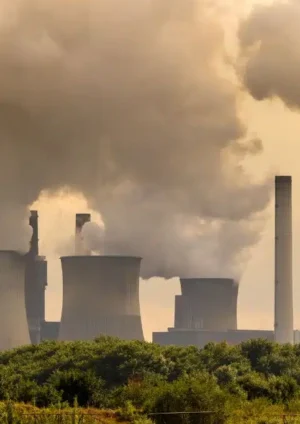
Around 0.5% of global carbon emissions could be captured while crushing rocks used in construction, new research suggests. The materials and construction industry accounts for 11 per cent of global carbon emissions and more than 50 billion tonnes of rock are crushed worldwide every year. Current crushing processes, standard in construction and mining, do not capture carbon dioxide CO2. The research paper ‘Mechanochemical processing of silicate rocks to trap CO2’, published in Nature Sustainability, says that almost no additional energy would be needed to trap carbon dioxide. 0.5 per cent...
News

Royal boost for sustainable aviation

The journey to net zero aviation is getting shorter thanks to a range of innovations aimed at reducing air travel carbon emissions. Major investment is going into new technologies and practical approaches to reduce the environmental impact of air travel with airlines, scientists, engineers and Formula One teams driving developments in sustainable fuel and low carbon technology. Sustainable aviation was on the royal agenda as King Charles, in his first engagement as King, launched a new £58 million net-zero aviation lab at the University of Cambridge, the facility set to become one of...
News

Two thirds of enterprise Net Zero targets lack integrity

Around two-thirds of enterprise Net Zero targets lack integrity, according to a study by the New Climate Institute. Highlighting the lack of progress, in February 2023 the Carbon Disclosure Project revealed that of the 18,000 organisations that had disclosed climate transition plans, only 0.4 per cent were credible. In a bid to improve reporting and credibility the Scope 3 Maturity Benchmark has been created by Proxima in collaboration with the Scope 3 Peer Group, a community that includes many of the world’s most recognisable companies who have chosen to work...
News

ISSB sets new rules for business’ climate disclosures

The ISSB has set out new global baseline rules for firms to disclose how climate change affects their business. In February 2023 the International Sustainability Standards Board (ISSB) agreed on all the technical content of its initial standards ahead of their expected issuance at the end of Q2 2023. The ISSB has already announced a package of reliefs and guidance to support use of the new standards, enabling companies to scale up their approach to using them over time. The initial IFRS Sustainability Disclosure Standards, S1 and S2, will become...
News

Only six countries meet WHO air pollution targets –

Only six countries met WHO air pollution targets last year: Australia, Estonia, Finland, Grenada, Iceland and New Zealand. Lahore in Pakistan is the city with the worst air pollution in the world according to a new global survey by IQAir. The 5th Annual World Air Quality Report reveals alarming details of the world’s most polluted countries, territories and regions in 2022.  Data from more than 30,000 air quality monitoring stations across 7,323 locations in 131 countries, territories and regions was analysed by IQAir’s air quality scientists and based on WHO...
News

How to avoid the ‘greenwashing’ label

Improving organisations’ sustainability credentials is becoming essential across all industries to avoid claims of greenwashing. More and more stakeholders are also putting pressure on companies to cut their emissions. Now more than ever, organisations need to make a concerted effort to reduce their impact on the planet if they want to meet the expectations of their customers, employees and stakeholders. “For many businesses that are starting to embrace sustainability, it is difficult to know where to start and despite genuine efforts, businesses can fall into the trap of greenwashing by...
News

Credible sustainability means showing your work –

Sustainability reports convey companies’ commitments but rarely the real, challenging work that goes into meeting these ambitious targets. To give sustainability campaigns substance they should be supported by business drivers, sustainability goals and marketing prowess, Don Hoyt Gorman, content strategist at The Frameworks suggests. Large companies face a profound challenge with their commitments to social and environmental change. We’re all familiar with greenwashing and empty promises: storytelling without substance. But companies that are genuinely doing the work are also struggling: they’ve got the substance but they don’t know how to tell the...
News

Responsible disposal of e-waste should be a business priority –

When asked to think about the topic of e-waste and recycling, our brains are likely to conjure up the image of mountains of surplus food or seas of single-use plastics, probably because this is what is often shouted about the most within the media. But what about other equally important waste streams such as waste electrical and electronic equipment (WEEE)? Over the last eight years, there have been an estimated 420.3 million metric tons of e-waste produced around the world and this figure is predicted to double by 2050. Given...
News

Open source app reduces IT carbon footprint by 30 per cent –

A new open-source software application reduces IT carbon footprint by 30 per cent by shutting down unused IT resources. The application, kube-green, was created by Mia-Platform’s senior tech leader Davide Bianchi to limit CO2 emissions for cloud-based applications as well as save costs. On average, kube-green can reduce CO2 emissions from IT infrastructures by 30 per cent. Early adopters are now beginning to report significant savings from using the application.   “We pay a lot of attention to using resources in a sustainable way,” said Lorenzo De Francesco, IT manager at fintech Step4Business. “Through...
News

Overcoming plastic waste in the fashion industry –

The fashion industry produces double the amount of clothing that it did 20 years ago and has seen a comparable increase in plastic waste. Is the fashion industry making inroads necessary to cut its use of plastic and ultimately limit its impact on the environment? A report by WIRED earlier this year highlighted the fact that, annually, ‘the fashion industry uses 342 million barrels of petroleum to produce plastic-based fibres such as polyester, nylon or acrylic…equating to 1.35 per cent of global oil consumption.’ While major steps have been, and...
1 9 10 11 12 13 19
Page 11 of 19