
Plastic Crisis: These Municipalities Are Turning to Reuse Systems
With new plastic waste regulations introduced in 2024 across regions such as the European Union, Hong Kong, and Toronto, municipalities have increasingly been forced to rethink their approach to disposable packaging.
While recycling remains part of the solution, many cities are now exploring reuse systems as a more effective long-term alternative.
Regulation and cost are key drivers of this shift. As Jonathan Tostevin of Muuse explains:
“Compostable biodegradable plastics are always more expensive, so reuse can save against them.”
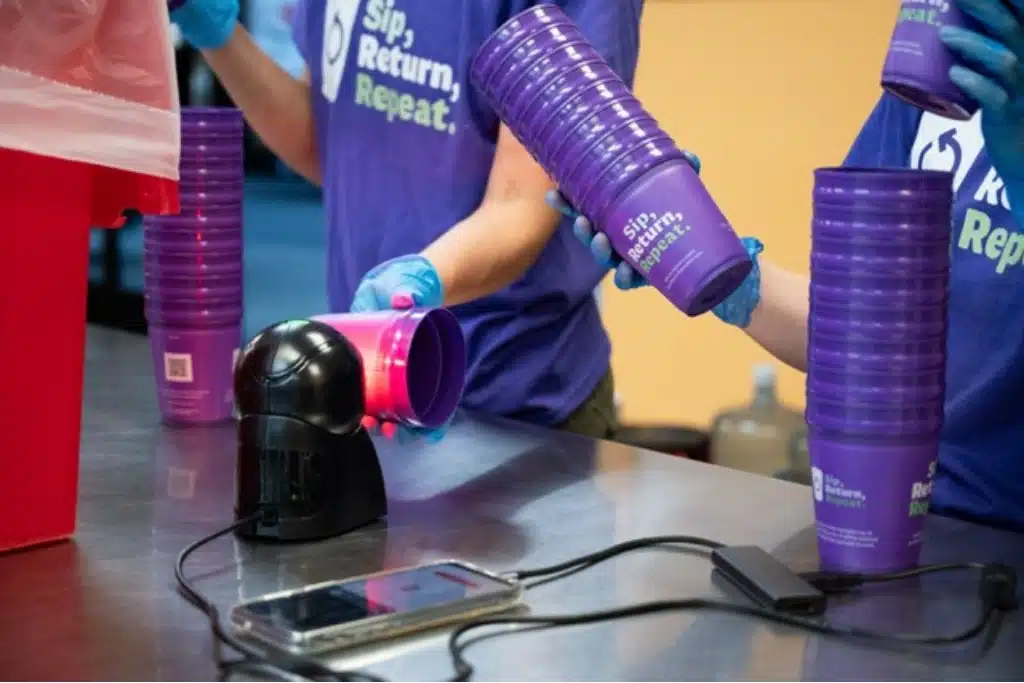
Muuse is part of a growing sector offering “Reuse as a Service” (RaaS) systems. These platforms supply durable cups and containers, manage cleaning and logistics, and track items using QR codes to ensure circulation.
From recycling to reuse systems
Experts emphasize that policy alone is not enough. Dana Winograd of Plastic Free Seas highlights that reusable systems require proper infrastructure:
Without collection, washing, and redistribution systems, “reusable” items often become single-use in practice.
Similarly, João Jalé of Tomra Reuse argues that a reusable product is only truly reusable if supported by a functioning system:
“A cup may be approved as reusable, but without a system, we consider it single-use.”
This has led to a shift in focus from individual products to entire closed-loop ecosystems.
The “closed loop” model in practice
Reuse systems work best in controlled environments where return rates can be managed efficiently.
Examples include:
- Large events such as concerts and festivals
- Dense restaurant and nightlife districts
- Integrated commercial developments
One example is Muuse’s deployment at large Coldplay concerts in Toronto, where reusable cups replaced thousands of single-use items across four nights.
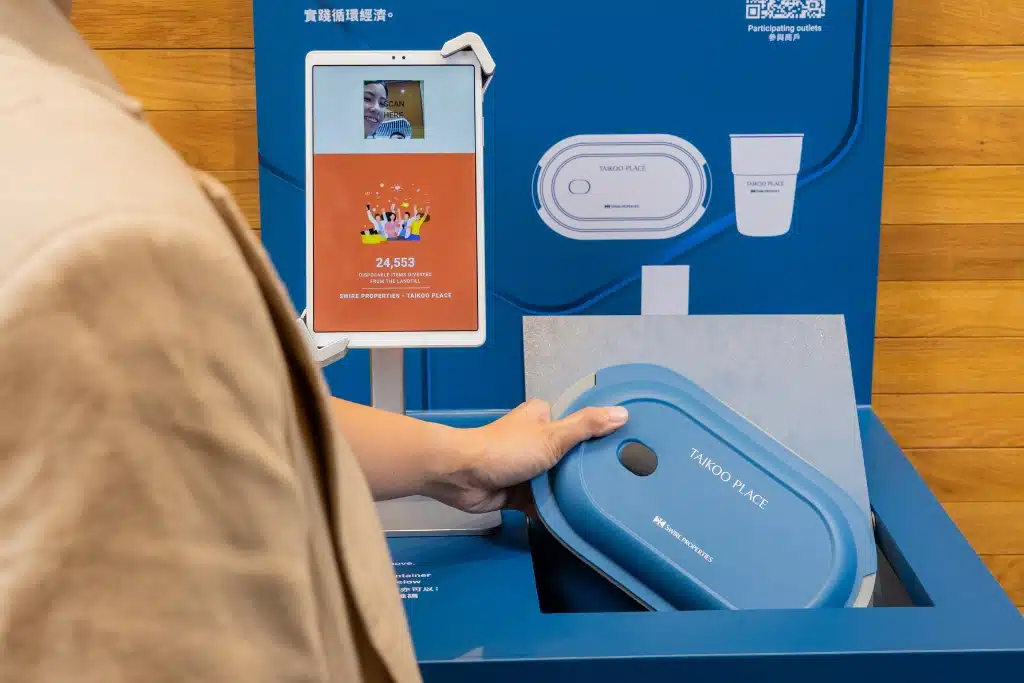
The company also operates in areas like Sentosa in Singapore and developments managed by Swire Properties in Hong Kong.
Improving usability and reducing friction
Early versions of reuse systems relied heavily on smartphone apps for returns. However, operators found that app-based systems created friction for users and staff.
As a result, many platforms have shifted toward simpler models, including:
- return stations without app requirements
- physical drop-off points in high-traffic areas
- integrated systems within venues and districts
The goal is to make returning items as effortless as disposing of waste.
Case study: Lisbon’s reuse transformation
In Lisbon’s Bairro Alto district, a dense nightlife area, reusable cup systems have been introduced to address severe waste problems.
Previously, the area generated around 25,000 single-use cups per day during peak periods.
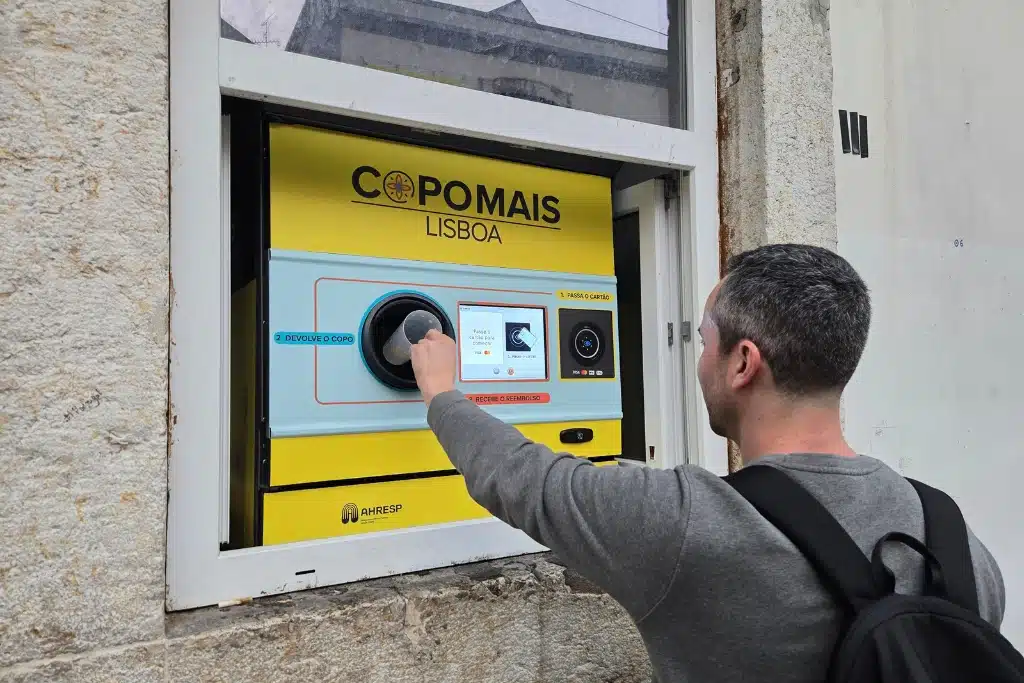
To address this, the city launched CopoMais, a partnership involving local government, Tomra Reuse, and the Portuguese hospitality association AHRESP.
Key features of the system include:
- a €0.50 refundable deposit per cup
- return machines placed throughout the district
- no app required for refunds
- automatic reimbursement to cards or digital wallets
The system is designed so that return points are within roughly 100 meters of nightlife areas, improving convenience and participation.
Logistics, hygiene, and system management
After collection, reusable cups must be:
- washed
- sterilized
- inspected
- redistributed to venues
Some businesses manage cleaning internally, but many systems rely on centralized facilities to ensure hygiene standards and consistency.
While global standards for reusable hygiene are still evolving, organizations such as PR3 are working to formalize best practices for cleaning and handling reusable containers.
Environmental and economic impact
Reuse platforms report significant reductions in single-use plastic consumption. For example, Muuse estimates:
- 1.5 million single-use items avoided
- 175,000 kg of greenhouse gas emissions reduced
Beyond environmental benefits, municipalities and businesses also gain operational advantages, including better waste tracking and reduced street litter.
Local business owners in Lisbon have also reported cleaner streets and economic savings linked to reduced cleanup costs.
Challenges to scaling reuse systems
Despite early successes, scaling remains difficult.
Key challenges include:
- changing consumer behavior
- infrastructure costs and placement of return points
- coordination across multiple businesses and stakeholders
- maintaining hygiene and logistics efficiency
As João Jalé notes:
“To implement a new system, to change a behavior, it’s not easy. We’re still learning.”
The road ahead
Reuse systems are increasingly seen as a promising alternative to single-use plastics, but their success depends on integration into everyday urban life.
Rather than relying solely on individual behavior change, these models aim to redesign the system itself — making reuse the default rather than the exception.